CareersHow Agents Get Paid
How Life Insurance Agents Get Paid in Plano
This career pays on commission, not hourly wages. This page breaks down where a commission comes from, what an advance is, why a chargeback happens, how your contract level sets your percentage and which expenses stay on your side, so the numbers make sense before you sit down with us.

Commission pay, explained before you sign anything
Roles like this one are almost always commission-only, with no base salary and no hourly rate. You earn when a client you worked with is approved by the carrier and the policy is placed in force. The commission is a percentage of that policy's first-year value, and the percentage is set by your contract level.
Two terms surprise most new agents. An advance is a portion of the first-year commission paid to you up front, before the client has made those monthly payments. A chargeback is the carrier taking back the unearned part of that advance when a policy lapses or is canceled early, commonly within the first 9 to 12 months. Advances help cash flow. They are not money you have fully earned yet.
We are a small team, so the person who explains your contract at the career interview is the same person who sits with you when your first statement arrives. On the interview call we go through the actual terms of your contract, including how commissions are paid and when chargebacks apply.
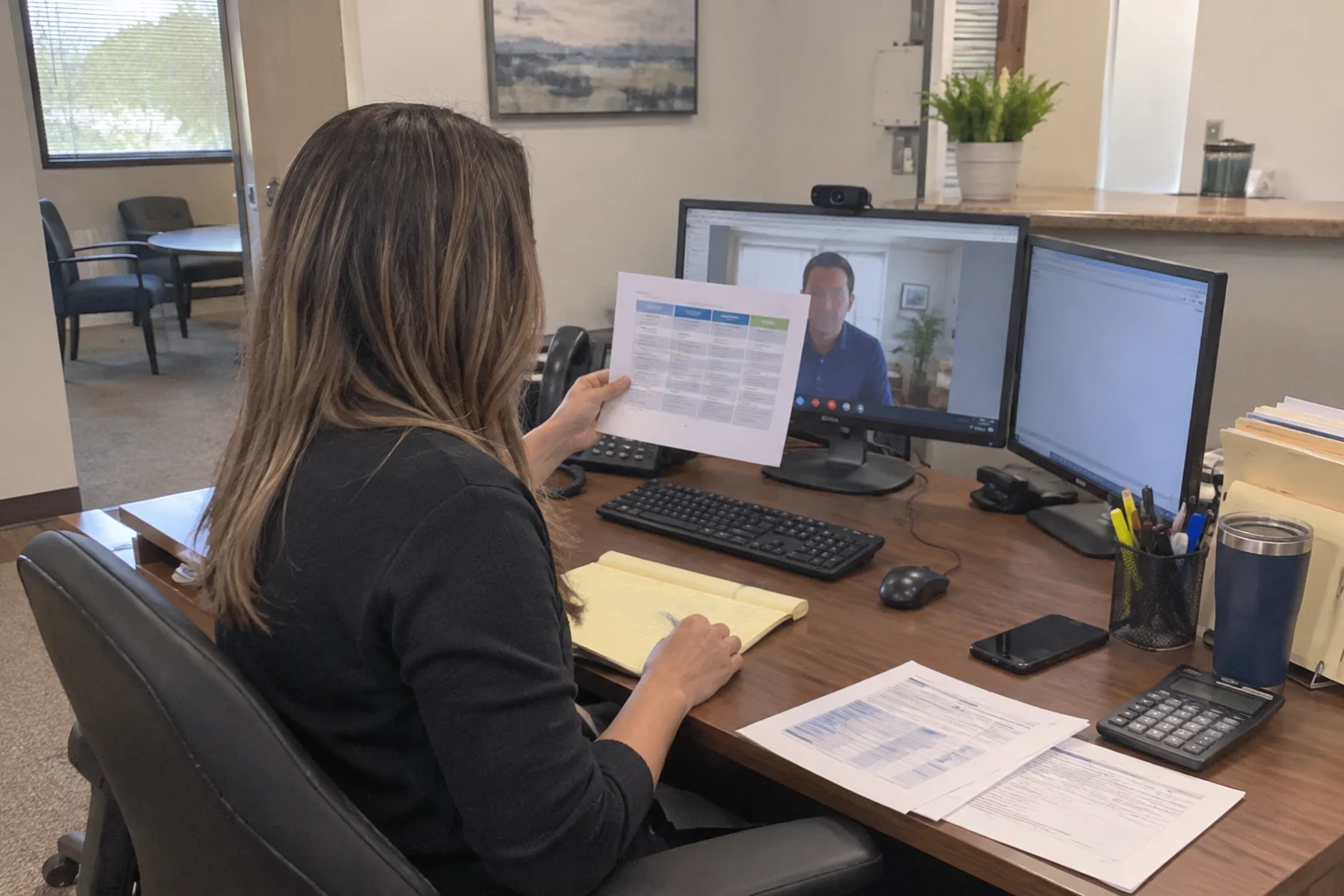
What the agency supplies so commission pay has a fair start
- 01
Step-by-step licensing guidance
No carrier will release a commission to someone without an active Texas life license. We lay out the exam, the fingerprint check and the state application in the order they have to happen, so a skipped step does not cost you weeks.
- 02
Free training on matching the right policy
Your income holds only while the policies you write stay active. Our free training shows you how to fit each client to a policy and a monthly amount they can keep up with, which is the most direct protection against chargebacks.
- 03
Agency-paid leads
Lead costs are carried by the agency, not by you. New agents who buy leads one at a time can owe money before they place a single policy, and that debt eats into every commission that follows.
- 04
Steady coaching and call reviews
We listen back to your recorded calls and point to the exact moment an appointment slipped away. Raising your close rate is where real income growth comes from.
- 05
Help reading your statements
Your first commission statements can look like a wall of codes. We go through them with you entry by entry, separating advances, as-earned amounts and any chargebacks, and the person doing it is the same one who explained your contract on day one.
Questions about How Agents Get Paid?
Call(972) 848-7930Is commission pay a good match for you
You want pay that follows your work
If a fixed hourly rate has capped what you can bring home, commission connects your income to your appointments and your skill. The flip side is that a slow week shows up in your pay.
You can commit 50+ hours a week
Agents who build consistent income run this as a full-time career, with long days of appointments, follow-up calls and training.
You can hear feedback and act on it
A call review means learning what went wrong and doing it differently the next day. No experience needed, since we teach you from zero, but the changes are yours to make.
You're prepared to get licensed
You must be 18+ (Texas license minimum) and pass the state life exam before you can write a policy or collect any commission.
Not a fit if you need a set paycheck
There is no salary here. If your bills depend on a guaranteed amount every two weeks, this is the wrong time for this career.
Not built for a side gig
A few calls squeezed into a weekend rarely produce enough placed policies for commission pay to amount to much.
The steps between your first call and your first commission
- 1
Career interview call
We ask about your goals and the hours you can commit, then explain how pay works in plain terms. Come with your questions on advances, chargebacks and expenses.
- 2
Pass the Texas life exam
You schedule the state life exam with Pearson VUE. Texas does not require a prelicensing course, but a solid prep course improves your chances of passing the first time, and we study the material alongside you on phone and video calls.
- 3
Fingerprints and TDI application
Your application starts in TDI's fingerprint portal, followed by an IdentoGO background check and a filing through Sircon or NIPR. Candidates usually cover the $50 resident life agent fee themselves.
- 4
Training and carrier contracting
You complete training and are contracted with carriers. Your contract level gets set at this stage, and we show you whether your commissions will arrive as advances or as earned.
- 5
First appointments with agency-paid leads
You begin talking by phone or video with people who asked for information. A commission is paid once the carrier approves and places the policy, not at the moment the application is signed.
What moves your income and your costs
Nobody can honestly predict what you will earn, and we will not pretend to. Your income depends on the factors below, and plenty of new agents earn very little in their first months. Any result you hear about is individual, not typical and not guaranteed, so look over the Earnings Disclaimer page before making a decision.
- Hours on the phone
- Each kept appointment is another chance to place a policy. Fewer hours worked means fewer placed policies, and commission tracks that number directly.
- Skill and close rate
- Two agents working the same number of leads can end the month far apart. Close rate climbs with call reviews and repetition, which is why coaching shows up in your pay.
- Lead quality and contact speed
- Someone who asked for information yesterday is far easier to reach than someone who asked last month. How fast you call and how consistently you follow up change your numbers.
- Persistency and chargebacks
- When a policy lapses early, the carrier can charge back the advance you already received. Writing policies a client can comfortably afford protects your income as much as theirs.
- Your own expenses as a 1099 agent
- Independent contractors usually cover licensing, E&O insurance, a dependable computer, a phone and internet service. Nothing is withheld from your checks, so you set aside your own money for estimated taxes.
Pay questions new agents ask
How do agents get paid, and is there a base salary?
Pay is commission-based, with no base salary. You earn a percentage of each placed policy's first-year value, set by your contract level. We explain the exact structure of your contract on the career interview call.
Will I be on a W-2 or a 1099 contract?
Most agents in this line of work sign a 1099 independent-contractor agreement. Taxes are not withheld, there are no employer benefits, and your business expenses are yours to manage and deduct. Before you sign, we confirm which contract you are on and go over what it changes about your taxes.
What are commission advances and chargebacks?
An advance pays part of a policy's first-year commission up front instead of month by month. If the policy lapses or is canceled before that commission is earned, the carrier charges back the unearned part, often from future commissions. Keeping clients in policies they can afford is the best way to limit chargebacks.
What expenses should I expect?
Plan for the state exam, fingerprinting and the $50 TDI application, which candidates normally pay. Add E&O insurance, a working computer, a phone and steady internet. Leads are agency-paid, so you won't be buying your own.
How soon after a sale do I get paid?
Commission is paid after the carrier approves and places the policy, not on the day the application is signed. Underwriting time varies by carrier and by the client's health questions. We show you how to track pending policies so you know what is coming.

Get the pay plan explained before you commit
Book a career interview and we will go through commission, advances, chargebacks and expenses with you directly. The same small team stays with you from that first call to your first statement.